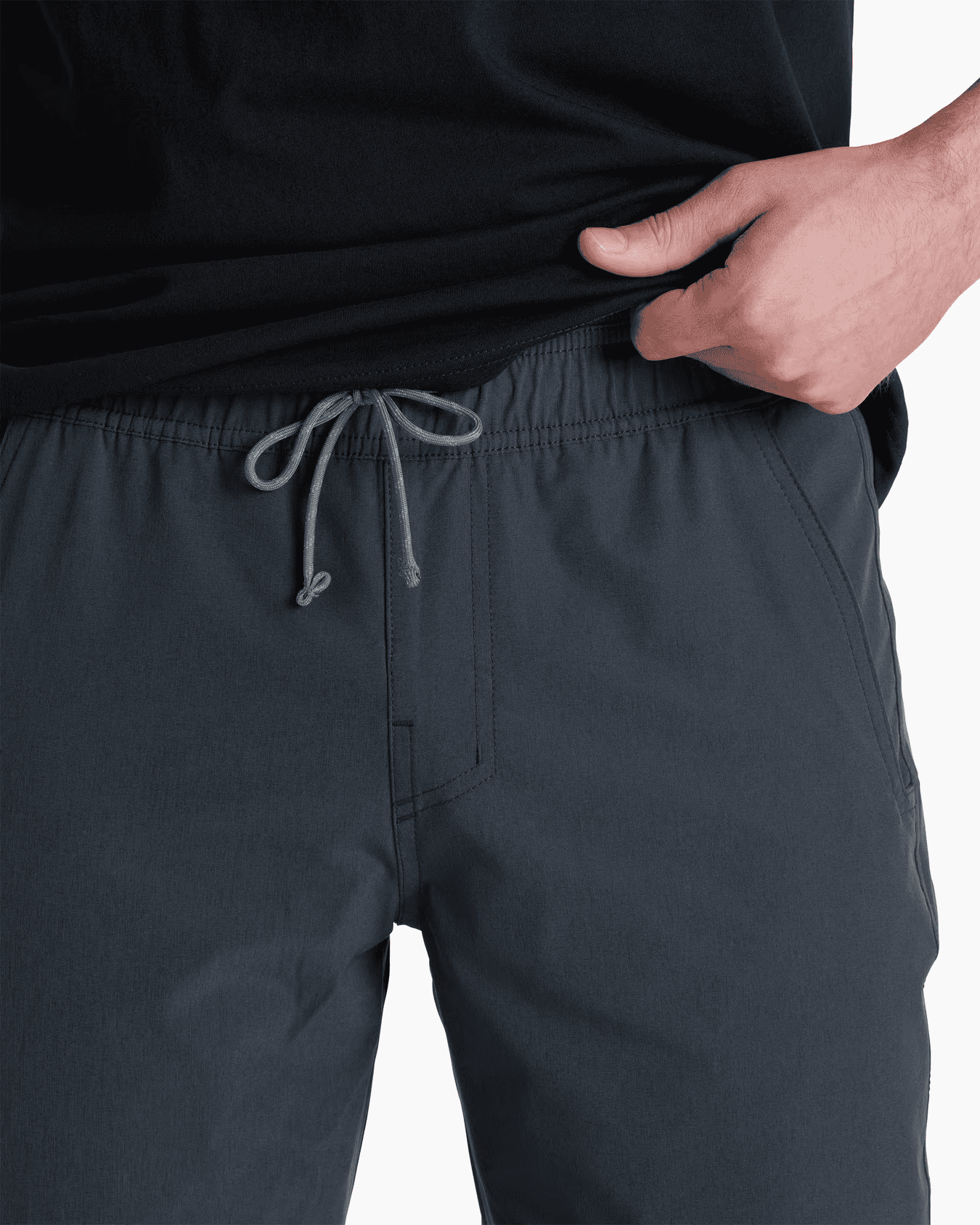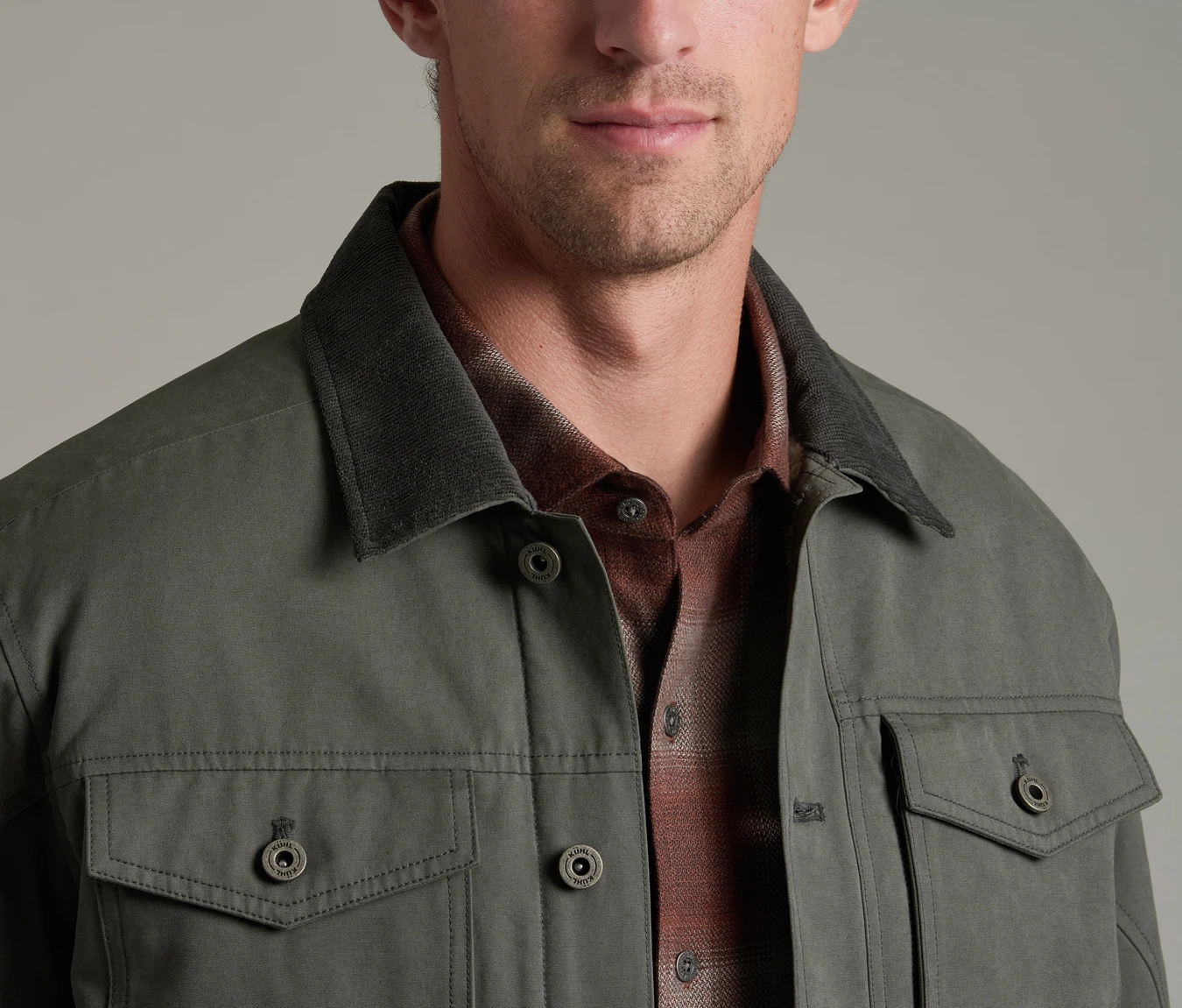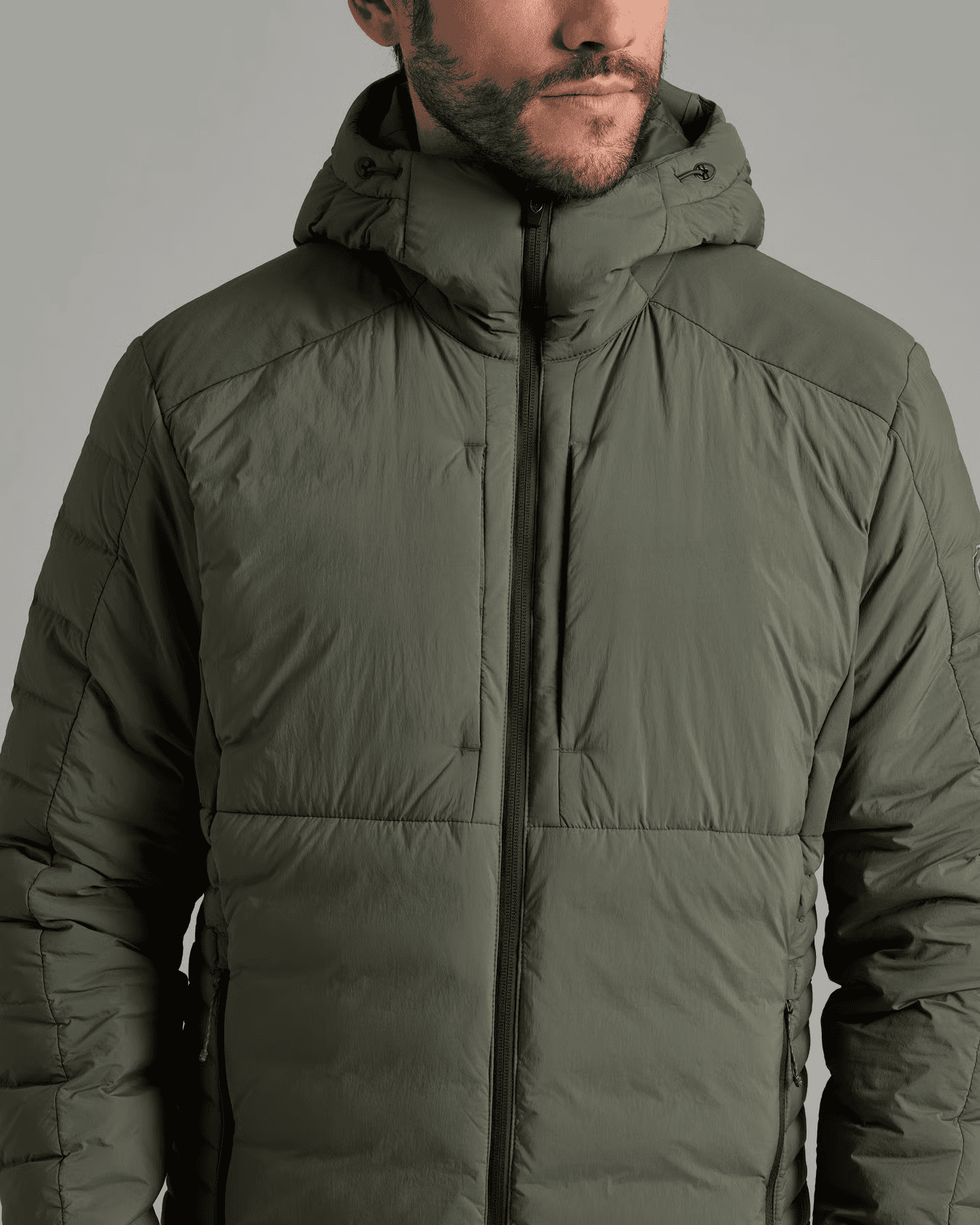
Fall-to-winter in the Rockies is the single hardest thing to pack for. You leave the trailhead in sun, you summit in wind, and somewhere on the way down the sky decides it's winter now. The "will we or won't we get snow" season punishes the wrong jacket in both directions — too little and you freeze when it turns, too much and you're a sweaty mess on the climb. The Spyfire is the jacket that's finally let me stop guessing.
What is the KÜHL Spyfire Hoody?
It's KÜHL's premium down hoody, built to be warm, mobile, and weather-ready without the bulk of a true expedition parka. The essentials:
| Spec | Detail |
|---|---|
| Price | $339 |
| Fill | 800-fill Muscovy duck down (larger clusters than typical goose down); 90% down / 10% feather |
| Weight | ~1 lb 2 oz |
| Shell | 20D MIKROTEX nylon, matte finish, PFC-free DWR |
| Panels | Breathable softshell overlays on upper side body; AERO KNIT insulation in zones |
| Baffles | Pre-baffled woven, stitch-free engineered 3D baffles — more down at the core, less in heat zones |
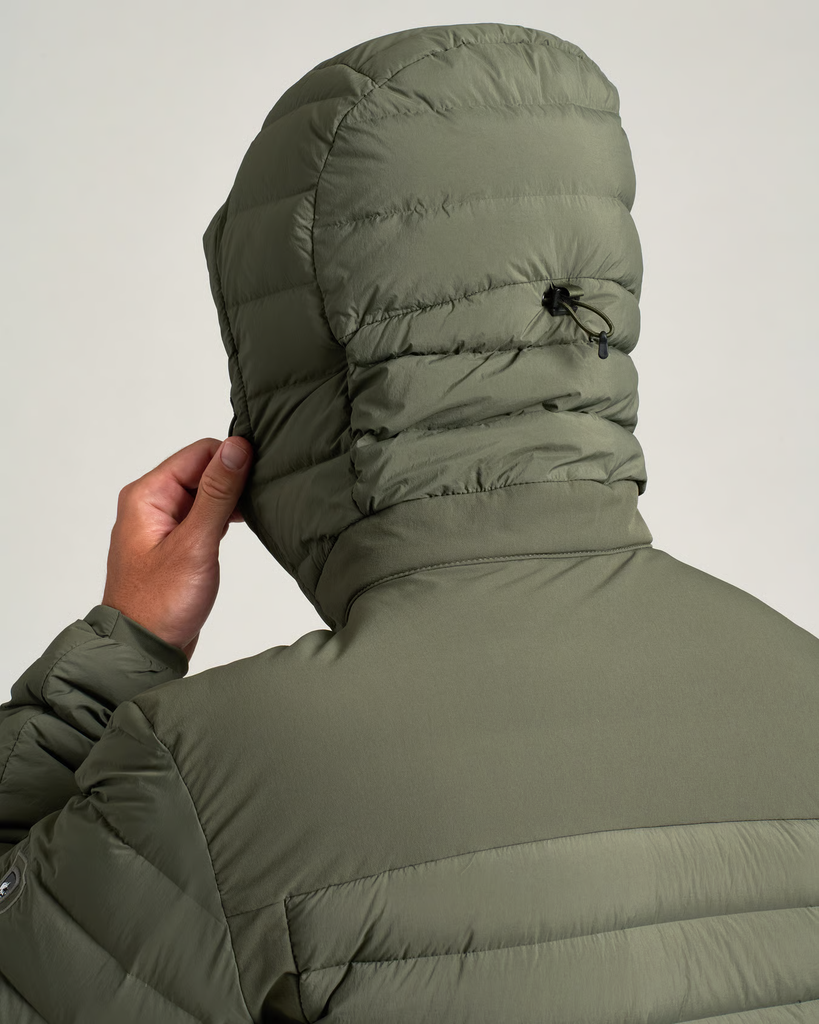
| Hood | Insulated, sculpted fit, cinches down; lies flat when down |
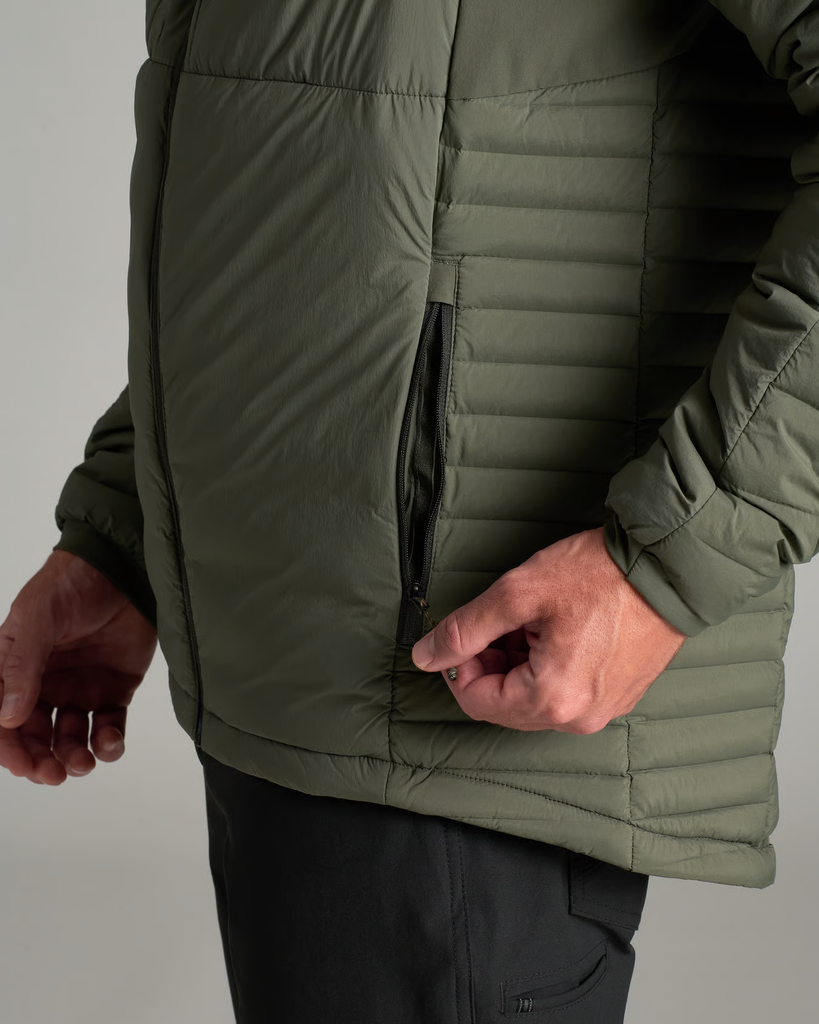
| Pockets | 2 zip chest, 2 insulated zip hand (with zipper garages), 1 interior drop-in |
| Details | Internal knit cuffs, articulated sleeves, single-adjust hem, YKK reverse-coil zips, reflective ribbon |
| Care | Machine wash cold/delicate; tumble dry low with tennis balls |
| Colors | Forest Green and others |
The headline number is 800-fill Muscovy duck down — a high warmth-to-weight fill with larger clusters that loft well and trap more air per gram. That's what gets you real warmth at just over a pound.
Why it handles the shoulder season so well
Plenty of down jackets are warm. What makes the Spyfire right for this season specifically is that it fights overheating as hard as it fights cold.
The baffle layout is zoned. KÜHL puts more down at your core, where you want heat held, and less down in the high-output zones that generate their own warmth when you're working. So when you're grinding up a climb, you're not trapping a furnace against your back — and when you stop and the wind hits, the core stays warm. For start-cold, warm-up-fast, cool-down-at-the-top hiking, that zoning is exactly the behavior you want.
Softshell panels let it breathe. The breathable softshell overlays on the upper sides vent heat and moisture where a fully down-filled jacket would turn clammy. This is the difference between a down jacket you have to keep taking off and one you can actually hike in.
It moves. Articulated sleeves and a low-profile cut mean you can reach, scramble, and set up camp without the jacket fighting you or riding up. A lot of warm down jackets turn you into a stiff marshmallow; this one doesn't.
The hood and hem seal up when it turns. When the "won't we" becomes "we definitely are," the insulated hood cinches down to block wind and snow, and the single-adjust hem seals the bottom. It goes from breathable climbing layer to storm-ready quickly.
Camping and hiking in the Rockies transition
This is where it's earned "go-to" status.
On a shoulder-season hike, I can start out in it on a cold trailhead morning, keep it on through the first climb because it breathes, and still have it be the right call when I hit an exposed, windy saddle and the temperature drops ten degrees. That range — comfortable while working and warm while stopped — is the whole ballgame for this season, and it's where most jackets force a compromise.
For camping, the warmth-to-weight is the win. At just over a pound it's an easy throw-in for the cold morning and evening bookends of a fall trip, and it packs down reasonably for what it is. The two insulated hand pockets with zipper garages are a small luxury that matters a lot when you're standing around a cold camp at dawn waiting for coffee, and the chest pockets keep phone and essentials secure and warm. The forest green colorway, for what it's worth, looks sharp enough that it's become my around-town winter jacket too.
Honest notes
The down isn't treated for wet. This is the one to understand. The shell has a PFC-free DWR that sheds light moisture — flurries, a brief squall — but the page doesn't list the down itself as hydrophobic/treated. Down loses loft and warmth when it gets soaked, so this is not the jacket for sustained rain or wet, heavy snow. For a genuinely wet day in the mountains, you want a shell over it or a synthetic insulator instead. For cold and dry — which is most of a Rockies winter — it's ideal.
It's a premium price. At $339 it's an investment. The fill quality, the engineered construction, and KÜHL's build justify it for someone who'll live in it all season, but it's a real number and there are cheaper down hoodies if you don't need the mobility and zoning.
Dial in the fit. KÜHL lists it as a low-profile, articulated cut without a clear slim/regular label. It's trim enough to layer under a shell but athletic in cut, so if you're between sizes or want room for thick mid-layers, try it on or check returns before committing.
Care takes a beat. Like all down, it wants a gentle wash and a tumble dry with tennis balls to restore loft — not hard, but not the wash-and-forget routine of a fleece.
Who it's for
- Buy it if: you need one warm, mobile layer for cold-and-dry shoulder-season and winter hiking and camping, you want down warmth without overheating on the move, and you'll use it in town too.
- Skip it if: you need wet-weather protection (get a shell or synthetic), you want the cheapest warm jacket, or you want a roomy, boxy fit.
KÜHL Spyfire Hoody: the verdict
The best jacket for an unpredictable season is the one that stops you from having to predict it. The KÜHL Spyfire does exactly that — 800-fill down warmth for when it turns cold, zoned baffles and breathable panels for when you're working hard, and a hood that seals up when the sky finally commits to snow. In the Rockies "will we or won't we" stretch, that range is everything.
At $339 it's a premium buy, and it wants cold-and-dry rather than soaking wet. But as the one jacket I now grab for fall-into-winter camping and hiking — and then wear to run errands the next morning — it's earned its spot. It's my new go-to winter jacket, and it took exactly one shoulder-season trip to know it.
FAQ
Is the KÜHL Spyfire Hoody good for hiking? Yes — it's one of the better down hoodies for active use. Zoned baffles put more down at the core and less in high-output areas, and breathable softshell side panels vent heat, so it stays comfortable while you're climbing instead of forcing you to stop and strip it off.
What kind of down is in it? 800-fill Muscovy duck down (90% down, 10% feather), which has larger clusters than typical goose down for strong loft and warmth-to-weight.
How warm is it, and how much does it weigh? It's a genuinely warm down hoody at only about 1 lb 2 oz, making it an excellent warmth-to-weight layer for cold-and-dry conditions.
Is the Spyfire Hoody waterproof? No. The shell has a PFC-free DWR that sheds light moisture, but the down isn't listed as treated/hydrophobic, so it's not meant for sustained rain or wet snow. Pair it with a shell for wet days, or choose synthetic insulation.
Is it good for cold-weather camping? Yes, especially for the cold mornings and evenings of fall and winter trips. The warmth-to-weight makes it easy to pack, and insulated zip hand pockets are a welcome touch at a cold camp.
How much does it cost? $339.
How do you wash it? Machine wash cold on delicate, no bleach or softener, then tumble dry on low with a couple of clean tennis balls to restore the down's loft.

Jason Nelson
Gear Tester, Huck Adventures
Jason has tested and reviewed outdoor gear since 2020 and now leads Huck Adventures, a family-run gear review site based in Idaho.
The Huck app, coming 2027
Everything you bring outside, in one free app.
Be first to hear when Huck launches.